
Why use WordPress for your website?
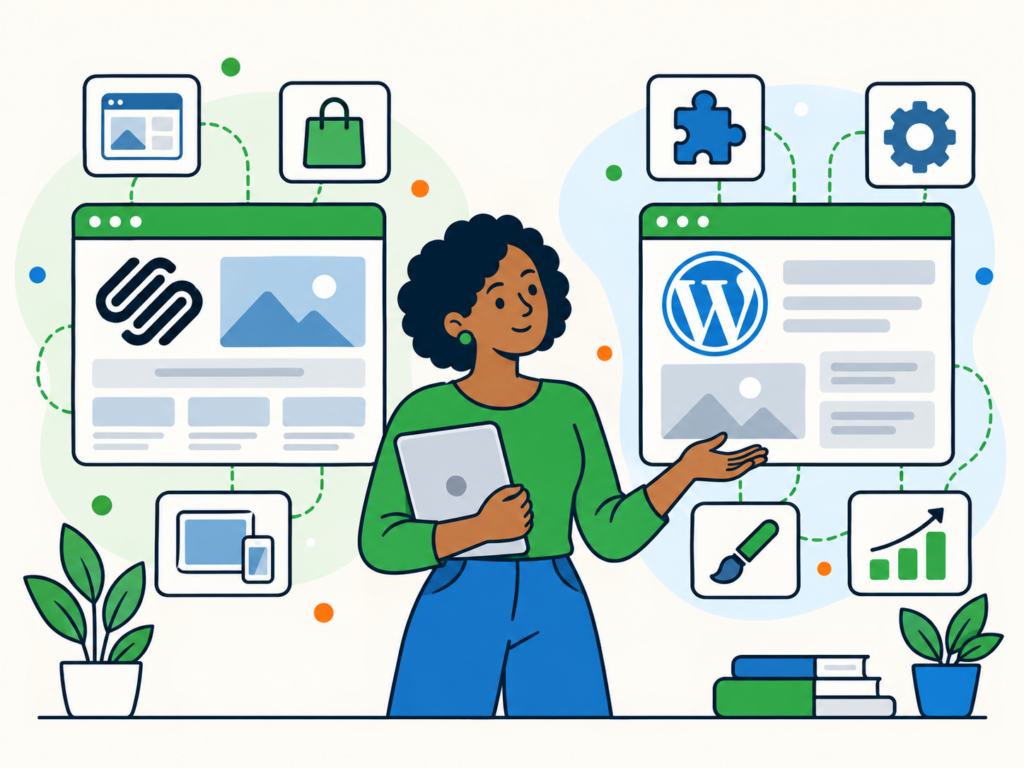
WordPress has changed considerably since it began as a blogging platform. Today it can be used for business websites, online stores, membership sites, publications, portfolios and much more.
It is not automatically the right platform for every project, but its flexibility, open-source model and mature ecosystem make it a strong option for many organisations.
Here are ten practical benefits of using WordPress for your website.
1. WordPress is open-source
One of the biggest differences between WordPress and many hosted website builders is that WordPress is open-source software.
WordPress is released under the GNU General Public License, which gives users the freedom to run, study, modify and redistribute the software.
That means the core platform is not controlled as a closed product by a single website-building company. Developers can inspect how it works, extend it and build their own solutions around it.
The WordPress software itself is free to use, although running a website will usually involve other costs such as hosting, domain registration, premium software, development or ongoing support.
If the distinction between the software and the services surrounding it is confusing, our guide to why WordPress is free explains this in more detail.
2. You have considerable control over your website
With a self-hosted WordPress website, you can choose where the site is hosted and who looks after it.
You are not necessarily tied to the company that originally built the website. If your requirements change, a WordPress site can usually be moved to another suitable hosting provider or maintained by another WordPress professional.
You also have access to the site’s content, database, themes and plugins rather than depending entirely on a closed website-building service.
That flexibility can be particularly valuable for businesses that expect their website to evolve over time.
3. WordPress can be used for many types of website
WordPress started as blogging software, but that stopped being its main limitation a long time ago.
Depending on the design, plugins and development work involved, WordPress can be used for:
- Business websites
- Blogs and publications
- E-commerce stores
- Membership websites
- Online courses
- Portfolios
- Directories
- Knowledge bases
- Event websites
- Multilingual websites
- Community websites
- Intranets and private websites
You do not need all of these capabilities when your site launches. The advantage is that WordPress gives you room to add new functionality later if the business changes.
4. Plugins make WordPress highly extensible
Plugins add functionality to WordPress without requiring every feature to be developed from scratch.
There are tens of thousands of free plugins available through the official WordPress.org directory, alongside commercial and custom plugins.
They can add features such as forms, e-commerce, SEO controls, backups, security tools, caching, memberships and integrations with external services.
That does not mean installing more plugins is always better. Every plugin needs to be selected carefully, maintained and kept compatible with the rest of the website.
A well-built WordPress site normally uses the plugins it needs rather than adding functionality simply because it is available.
If you are new to the process, see our guide to installing WordPress plugins.
5. Themes give you flexibility over design
WordPress themes control much of a website’s presentation.
A theme can determine layouts, typography, colours, templates and other parts of the visual experience. You can choose from free and commercial themes or have a custom theme developed around your organisation.
Modern WordPress also includes block-based editing and site-building tools that can give website owners more control over layouts without needing to edit code for every change.
The right approach depends on the website. An off-the-shelf theme may be enough for a simple project, while a business with more specific requirements may benefit from a tailored design.
6. Managing everyday content is straightforward
Once a WordPress site has been set up properly, routine content changes do not usually require a developer.
Editors can create and update pages, publish articles, upload media, manage navigation and make many other everyday changes through the WordPress administration area.
The block editor lets you build content from individual elements such as paragraphs, headings, images, buttons, columns and other blocks.
This gives website owners control over regular publishing while still allowing developers to handle more technical changes when needed.
If you want to understand the editor in more detail, our WordPress block editor tutorial explains how it works.
7. WordPress can grow with your organisation
A WordPress website can start relatively small and become considerably more sophisticated over time.
You might begin with a straightforward business website and later add e-commerce, multilingual content, integrations, custom post types or other functionality.
WordPress also includes Multisite, which can be configured to manage a network of related websites from one WordPress installation.
Scaling successfully still depends on good development, hosting, database management, caching and maintenance. WordPress does not make performance or scalability automatic.
What it does provide is a platform that can support a wide range of requirements without forcing you to rebuild simply because the website becomes more complex.
8. WordPress supports teams and different access levels
Businesses rarely want every person who works on a website to have the same level of access.
WordPress includes built-in user roles and capabilities that control what different users are allowed to do.
For example, an Administrator can manage the website at a much deeper level than an Editor, Author, Contributor or Subscriber.
Roles can also be customised when a website needs more specific permissions.
This makes WordPress useful for organisations where several people publish content or manage different parts of the site without everybody needing full administrative access.
9. WordPress can integrate with other systems
A business website rarely operates completely on its own.
WordPress can connect with payment providers, email marketing platforms, customer relationship management systems, analytics tools, external databases and many other services.
Plugins provide many of these integrations, while developers can create custom connections when an off-the-shelf option is not suitable.
WordPress also includes a REST API, which allows other applications to interact with WordPress data in a structured way.
This means WordPress can work as part of a broader technology stack rather than existing as an isolated website.
10. WordPress has a mature ecosystem behind it
WordPress has been developed since 2003 and has a large international community around it.
That ecosystem includes core contributors, developers, designers, hosting companies, plugin and theme authors, agencies, support professionals and WordPress events around the world.
For website owners, that means there is a large pool of knowledge and expertise available.
You are not relying on one small development team being available forever. If your original developer disappears or your requirements change, there are many other WordPress professionals who can work with the platform.
That maturity is one of WordPress’s biggest practical advantages for a business website intended to last for years.
What about SEO, security and performance?
WordPress can provide a strong foundation for all three, but the platform alone does not guarantee them.
Simply choosing WordPress will not make a website rank highly in Google. Search performance still depends on areas such as content quality, site structure, technical SEO, links, usability and competition.
Likewise, no content management system is automatically secure or fast. A WordPress site still needs reputable software, sensible hosting, updates, backups, security controls and ongoing maintenance.
These are areas where the quality of the website setup and how it is looked after matter more than the WordPress name itself.
Is WordPress right for your website?
WordPress remains a strong choice when you want a flexible website that you can adapt, extend and maintain over the long term.
Its open-source model gives you freedom, while themes, plugins, APIs and a large professional ecosystem provide many different ways to build on the core platform.
That does not mean WordPress is automatically the best choice for every website. The right platform depends on what you need the site to do, who will maintain it and how you expect those requirements to change.
If you already use WordPress and need help keeping it reliable, secure and up to date, Newt Labs provides WordPress support and ongoing care plans, as well as one-off specialist help.